
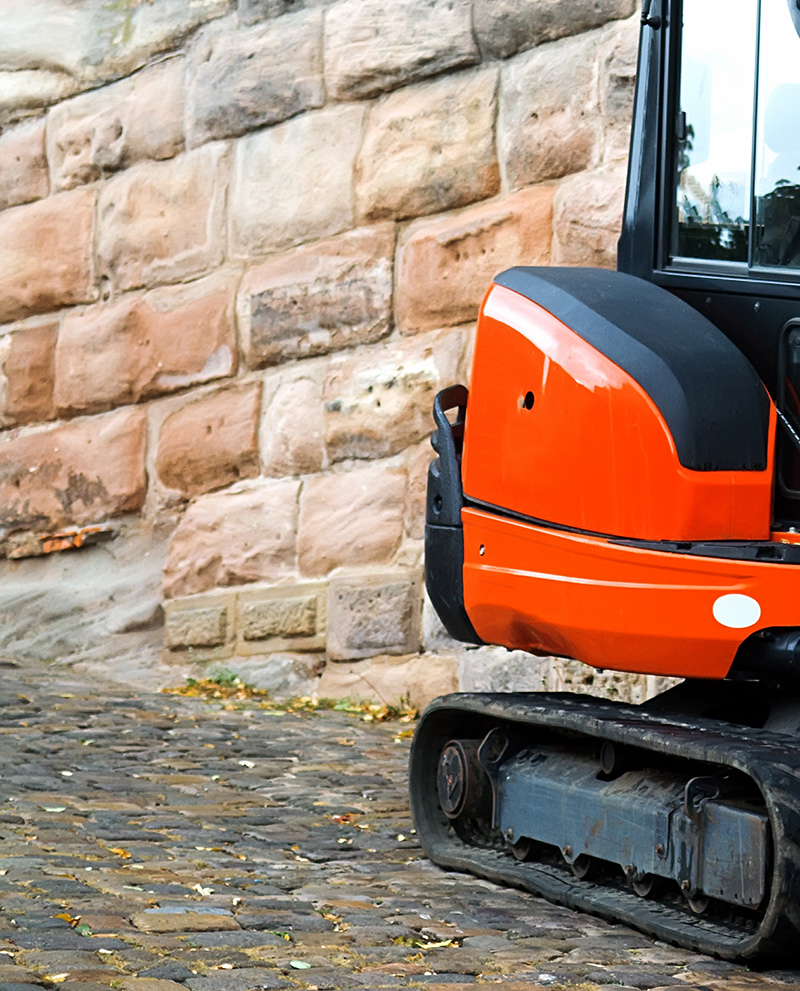
Choosing between a 1-ton and 1.5-ton mini digger is not simply a matter of purchasing the largest machine within your budget. The right choice depends on the type of work you plan to complete, the available site access, the ground conditions and how regularly the machine will be used.
A compact 1-ton mini digger can be a practical option for residential landscaping, drainage, trenching, fencing and self-build projects. Its smaller size can make it easier to position within gardens, around existing structures and in areas where working space is restricted.
A 1.5-ton mini digger provides increased engine power and a heavier-duty build. This can make it better suited to professional landscaping, construction work, foundations, deeper trenches and more demanding excavation.
Mini Diggers Online currently offers the Hornet HT10CKS 1-ton Mini Digger and the Hornet HT15LKS-2 1.5-ton Mini Digger. This guide explains the main differences between the two machines and helps you identify the most suitable option for your work.
Quick Comparison
The Hornet HT10CKS is the compact choice. It has an 11.5HP diesel engine and is designed for landscaping, garden renovation, drainage, trenching and lighter groundwork.
The Hornet HT15LKS-2 is the heavier-duty choice. It has a 25HP liquid-cooled diesel engine and is intended for professional landscaping, construction work and more demanding excavation.
Both models offer 360-degree rotation, a swing boom, rubber tracks and quick-fit attachment systems. They are also supplied with three digging buckets measuring 380mm, 500mm and 600mm.
As a general guide, choose the 1-ton HT10CKS when compact dimensions and restricted access are the main priorities. Choose the 1.5-ton HT15LKS-2 when increased engine power, frequent use and tougher excavation are more important.
Understanding the Hornet HT10CKS 1-Ton Mini Digger
The Hornet HT10CKS is the smaller of the two current Hornet machines. Its compact 1-ton design makes it a practical choice for residential sites, gardens and locations where a larger excavator may be difficult to manoeuvre.
The machine is powered by an 11.5HP diesel engine and features 360-degree rotation, a swing boom and an electric-start system. Its quick-fit attachment system can help reduce the time required to change compatible buckets and tools.
A key advantage of the HT10CKS is its manageable size. Many landscaping and home-improvement projects take place around existing buildings, walls, paths, fences and planted areas. A smaller machine can make it easier to position the digger without unnecessarily disturbing the rest of the site.
The HT10CKS can support a range of suitable projects, including:
- Garden landscaping and renovation
- Drainage channels
- Trenches for pipes and cables
- Shallow foundations and footings
- Fence-post preparation
- Tree and shrub planting
- Patio and driveway preparation
- General residential groundwork
Its smaller design does not mean it is suitable for every restricted-access site. Before ordering, you should still check the exact machine dimensions and measure the entire access route from the delivery point to the working area.
Understanding the Hornet HT15LKS-2 1.5-Ton Mini Digger
The Hornet HT15LKS-2 is the heavier-duty model within the current range. It combines a 1.5-ton operating weight with a 25HP liquid-cooled diesel engine, providing a significant increase in power over the HT10CKS.
The machine also includes 360-degree rotation, a swing boom, rubber tracks and a quick-fit coupler. Its reinforced boom and hydraulic thumb can provide additional versatility when handling logs, pipes, debris and other suitable materials.
The HT15LKS-2 is likely to be the stronger option for customers who expect to use their machine regularly or for more demanding excavation. Its increased power may be particularly valuable for professional landscapers, builders, contractors and property developers.
Typical applications may include:
- Larger foundations and footings
- Deeper trenches
- Professional landscaping
- General construction groundwork
- Pipe and cable installation
- Site preparation
- Material handling
- Fencing and tree planting
- Suitable small-scale demolition work
The trade-off is that a larger and heavier machine may require more room for transportation, unloading and operation. It is therefore important to consider the entire working environment rather than choosing the HT15LKS-2 based on power alone.
Site Access and Working Space
Site access is one of the most important factors when choosing a mini digger. A machine may appear compact, but it still needs to travel from the delivery point to the working area and have sufficient room to operate.
Measure gateways, paths, driveways and entrances carefully. You should also consider corners, slopes, changes in ground level, overhead obstructions and narrow sections along the route.
Do not measure only the final gateway into the garden or site. The machine must be able to navigate the complete route safely.
Operating space is equally important. The digger requires room to rotate, position its boom and move around the excavation area. A 1.5-ton machine may physically enter the site but still have insufficient room to work efficiently.
Where access is restricted, the 1-ton HT10CKS is likely to be the more manageable option. On larger, open sites, the additional power of the HT15LKS-2 may offer greater practical value.
Ground Conditions and Excavation Requirements
The type of ground being excavated should also influence your decision.
A compact 1-ton mini digger may be suitable for garden soil, landscaping, drainage and lighter groundwork. However, larger or repeated excavations may benefit from the increased power of the 1.5-ton machine.
Consider the depth and width of the excavation, the amount of material that must be removed and how regularly the machine will be used.
For occasional residential projects, the HT10CKS may provide the right balance of manoeuvrability and digging capability. For professional work, larger foundations or more demanding ground conditions, the HT15LKS-2 is likely to be the more appropriate choice.
The largest machine is not automatically the most productive. A heavier digger may offer greater power, but that advantage can be reduced if the site does not provide sufficient space to position and operate it effectively.
Which Size Is Best for Landscaping?
For many domestic landscaping projects, a 1-ton mini digger will provide sufficient capability.
The HT10CKS can be used for garden excavation, planting areas, drainage, trenching, patios, driveways and fencing work. Its smaller footprint can make it easier to operate around buildings, walls and existing landscaping.
A 1.5-ton machine may be preferable for larger landscaping projects, commercial grounds or situations where a greater volume of soil must be removed. Professional landscapers who use a mini digger regularly may also benefit from the increased engine power and heavier-duty construction of the HT15LKS-2.
The decision should be based on the typical size of your projects rather than the largest job you might occasionally complete.
Which Size Is Best for Drainage and Trenches?
Both the 1-ton and 1.5-ton models can support drainage and trenching work.
The best choice will depend on trench depth, width, ground conditions and access. A 1-ton machine may be suitable for residential drainage channels, water pipes, electrical cables and garden projects.
A 1.5-ton model may be more appropriate for deeper trenches, larger installations and regular professional groundwork.
Bucket choice will also affect trenching performance. Both Hornet machines are currently supplied with three digging buckets measuring 380mm, 500mm and 600mm. The narrower bucket can provide greater control for trenches, while the wider options can remove a larger volume of material.
Which Size Is Best for Foundations and Footings?
For small garden buildings, extensions and residential landscaping features, the HT10CKS may be suitable for preparing shallow foundations and footings.
Larger foundations or repeated construction work may benefit from the additional power of the HT15LKS-2. The heavier-duty machine is likely to be the more practical option for builders, contractors and customers completing larger projects.
Before starting foundation work, always confirm the required dimensions and specifications with the relevant designer, engineer or building professional. The mini digger should be selected to suit the approved excavation requirements.
Transport and Storage
Machine size and weight affect transportation, unloading and storage.
Before purchasing a mini digger, consider how the machine will be moved between sites. Ensure that the proposed vehicle, trailer and loading arrangements are suitable for the machine being transported and comply with the relevant requirements.
The 1-ton HT10CKS may be easier to transport and store due to its smaller format. This can be beneficial for landscapers, self-builders and property owners with limited storage space.
The 1.5-ton HT15LKS-2 will require suitable transport arrangements that account for its increased size and operating weight.
You should also consider where the machine will be stored between projects. A secure, weather-protected location can help protect your investment and reduce the risk of unauthorised access.
Buckets and Attachments
The usefulness of a mini digger is not determined by the base machine alone. Compatible buckets and attachments can allow one machine to support several stages of a project.
Both current Hornet mini digger listings include:
- 380mm digging bucket
- 500mm digging bucket
- 600mm digging bucket
The 380mm bucket is useful for narrower trenches and controlled excavation. The 500mm bucket provides a versatile option for general digging. The 600mm bucket can remove a broader volume of material during suitable excavation work.
Additional compatible attachment types may include hydraulic breakers, grading buckets, augers, grapples, forks and ripping hooks.
The Hornet Hydraulic Breaker Kit is designed for compatible mini diggers between 0.8 and 1.5 tonnes. It can support suitable concrete, rock and hard-material work.
You can browse currently available buckets, tracks and equipment through the Mini Digger Accessories section.
Always confirm that an attachment, bucket or replacement part is compatible with your particular machine before ordering.
Do You Also Need a Dumper?
Excavation produces soil, rubble and other material that must be moved away from the working area.
A mini digger can complete the excavation, but repeatedly moving the removed material by hand can slow the project considerably. Pairing the digger with a compact dumper or transporter can create a more efficient workflow.
The digger can load the material directly into the transporter, which can then move it to a skip, storage area or another part of the site.
Visit the Dumpers and Transporters category to compare available machinery for material movement.
Should You Buy the 1-Ton HT10CKS?
The HT10CKS is likely to be the better option when:
- Access and manoeuvrability are important
- Most projects involve residential gardens
- You complete drainage, fencing or planting work
- Excavation is generally light to moderate
- You need a compact machine for self-build projects
- Transportation and storage space are limited
Its compact design makes it well suited to customers who need a practical mini digger for landscaping, garden renovation and lighter groundwork.
View the Hornet HT10CKS 1-ton Mini Digger for current specifications, pricing and availability.
Should You Buy the 1.5-Ton HT15LKS-2?
The HT15LKS-2 is likely to be the better choice when:
- The machine will be used regularly
- You complete professional landscaping or construction work
- Projects involve larger foundations or deeper trenches
- More demanding excavation is common
- Increased engine power is a priority
- You need a heavier-duty machine for ongoing work
Its 25HP liquid-cooled diesel engine and reinforced boom make it better suited to demanding workloads and frequent professional use.
View the Hornet HT15LKS-2 1.5-ton Mini Digger for full specifications, pricing and availability.
Final Recommendation
Choose the Hornet HT10CKS when compact dimensions, residential access and lighter landscaping or groundwork are the main priorities.
Choose the Hornet HT15LKS-2 when you expect frequent use, larger projects and more demanding excavation that will benefit from increased engine power and heavier-duty construction.
Before placing an order, measure the full access route, consider the available operating space and review your transport and storage arrangements. You should also think about the buckets and attachments you may need for future projects.
You can compare the complete range through the Mini Diggers for Sale UK page, browse the current Mini Diggers category or contact Mini Diggers Online for practical product and delivery information.
Frequently Asked Questions
Is a 1-ton mini digger powerful enough for landscaping?
A 1-ton mini digger can support many landscaping tasks, including garden excavation, drainage, trenching, planting, fencing and preparation for patios or driveways. The right choice will depend on project scale, ground conditions and access.
What is the main advantage of a 1.5-ton mini digger?
The main advantage is its increased power and heavier-duty construction. This can make it better suited to professional work, larger excavations and more frequent use.
Do both Hornet mini diggers include buckets?
Yes. The current HT10CKS and HT15LKS-2 listings include 380mm, 500mm and 600mm digging buckets.
Can both mini diggers use a hydraulic breaker?
The current Hornet Hydraulic Breaker Kit is designed for compatible mini diggers between 0.8 and 1.5 tonnes. Always confirm the pin size and compatibility with your particular machine before ordering.
Is a 1-ton mini digger always better for restricted access?
The 1-ton model will generally be easier to manoeuvre than the 1.5-ton machine. However, you should still check the exact product dimensions, complete access route and available operating space.
Is a 1.5-ton mini digger suitable for residential projects?
Yes, provided there is sufficient access and operating space. A 1.5-ton machine may be beneficial for larger residential excavation, foundations, drainage and extensive landscaping work.
Should I choose a mini digger based only on engine power?
No. Access, operating space, transport, ground conditions, attachments and expected workload are equally important. A smaller machine can be more productive when working in a restricted area.
Where can I compare the available mini diggers?
Visit the Mini Diggers for Sale UK page or view the individual HT10CKS and HT15LKS-2 product listings.

